Whether you're setting up a direct deposit for a new job or arranging automatic bill payments, you'll likely be asked for a "voided cheque." But what does that actually mean, and how do you do it safely?
What is a Voided Cheque?
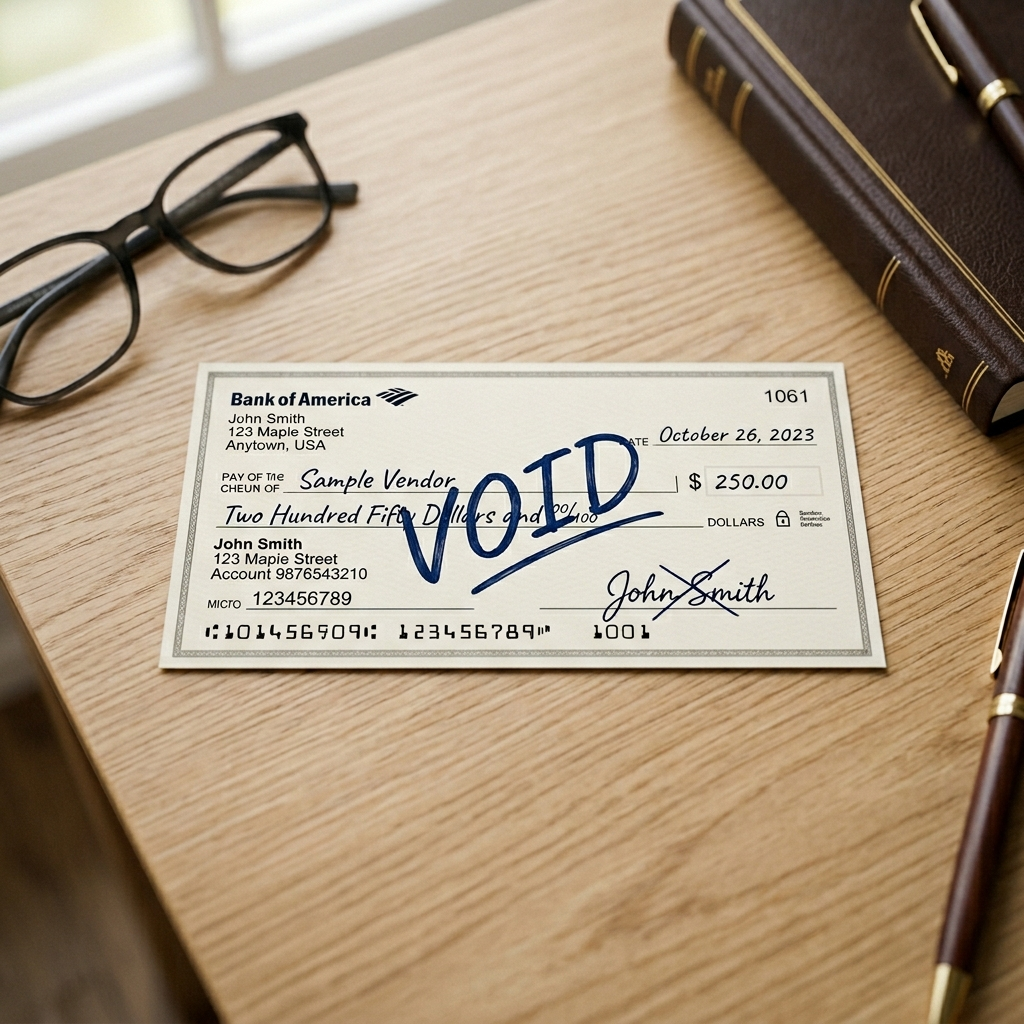
A voided cheque is a cheque that has the word "VOID" written across the front. This indicates that the cheque cannot be used for payment, but it still provides all the necessary banking information (transit number, institution number, and account number) for electronic transfers. Learn how it differs from a cancelled cheque.
Step-by-Step: How to Void a Cheque
Get a fresh cheque from your chequebook.
Use a dark blue or black permanent pen.
Write "VOID" in large, clear capital letters across the front of the cheque.
Ensure the word "VOID" covers the signature line and the amount box, but does not obscure the banking numbers at the bottom.
Crucial: Never sign a cheque before voiding it. A signed voided cheque is a security risk.
Common Uses for Voided Cheques
- Direct Deposit setup for payroll
- Automatic mortgage or rent payments
- Pre-authorized insurance premiums
- Setting up personal loan repayments
What if I Don't Have a Chequebook?
Most modern banking apps and online portals allow you to download a "Direct Deposit Form" or "Pre-Authorized Payment Form." This document contains the exact same information as a voided cheque and is widely accepted by employers and service providers.
Summary
Voiding a cheque is a simple but essential banking skill. By writing "VOID" clearly and ensuring your bank details remain legible, you can safely authorize electronic transactions without any risk of the physical cheque being cashed.